To grow your glutes, follow a repeatable strength program that challenges them through suitable exercises, increases the training demand gradually and allows enough recovery. Squats, hip thrusts, hinges and single-leg movements can all contribute. Consistent training, adequate food and protein, and patience matter more than chasing a different workout or a bigger muscle burn every session.
Glute training is about more than appearance. These muscles help you stand up, climb stairs and move through everyday tasks. If you want stronger glutes or more muscle, understanding how your program works makes it easier to choose exercises and recognise progress.
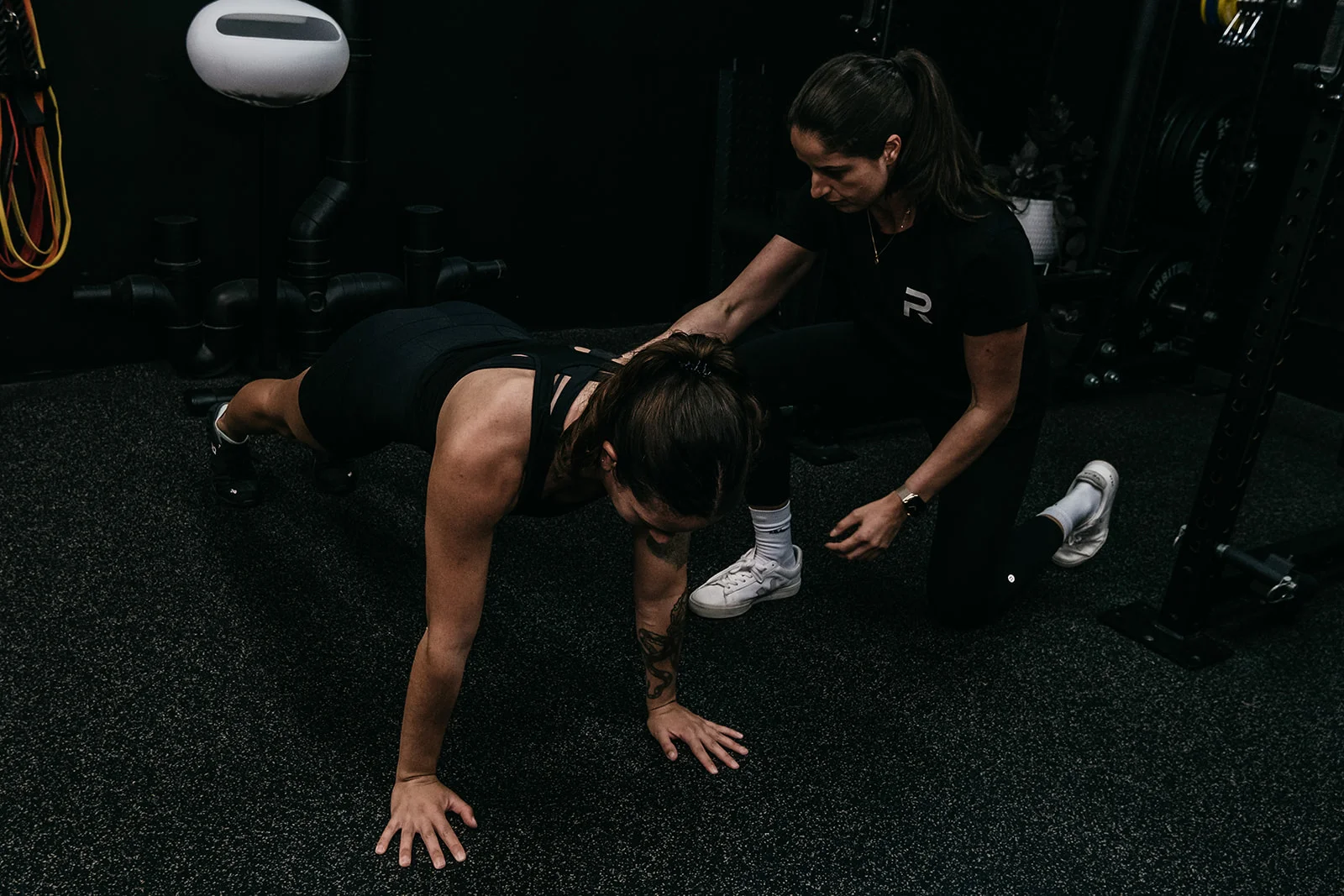
At Resolve Performance in Burleigh Heads, we use personalised strength programs to help clients work towards their goals. Here is how to approach glute training with a clearer plan.
Which exercises help build your glutes?
There is no single exercise everyone must do. Your program can combine movements that challenge the glutes in different positions, using equipment and variations you can control. These are useful options to discuss with your coach:
Hip thrusts and glute bridges
Both involve extending the hips against resistance. A floor bridge can be a practical starting point, while hip thrust variations allow resistance to be increased as your ability develops. Set up so you can move comfortably and finish the repetition through your hips without deliberately arching your lower back.
Squats and split squats
Squat variations train the glutes alongside other leg muscles. A goblet squat, supported split squat or other appropriate variation may suit your starting point. Use a range you can control and build from there; copying another person’s stance or depth is not automatically the right choice for your body.
Romanian deadlifts and other hip hinges
A hip hinge teaches you to move through the hips while managing the load. With a Romanian deadlift, begin with a weight that lets you practise the movement without rushing. Your range should reflect your control and mobility rather than an instruction to touch the floor.
Step-ups and other single-leg movements
Step-ups and lunges can add variety and challenge each side individually. Choose a step height or movement variation you can manage without relying heavily on momentum. Support for balance can make it easier to focus on the working leg.
A study comparing squat and hip thrust training found similar glute muscle growth in its study groups. It is one study rather than a universal prescription, but it is a useful reminder that more than one exercise can work. The exercise you can perform and progress appropriately deserves consideration.
How often should you train your glutes?
Two sessions across the week can be a practical starting structure for a beginner. Those sessions can sit within full-body training rather than becoming two extra workouts added to an already demanding schedule. Leave recovery time between challenging sessions and consider the leg work you are already doing.
For example, one session might include a squat variation and a bridge, while another includes a hip hinge and a supported split squat. This is an illustration of exercise distribution, not a personalised program. Your coach can adjust the number of sets, repetitions and exercises to match your experience and recovery.
Adding more days is not the first answer if you are struggling to recover or perform your current sessions consistently. Start by checking whether the existing work is appropriate and whether you are progressing it.
How do you make glute training progressively harder?
Progressive overload means increasing the challenge as your capacity improves. It can involve lifting more weight, completing additional controlled repetitions or improving your range of motion. Change one variable deliberately so you can understand what has improved.
Suppose your program uses a repetition range. First, work towards completing the prescribed repetitions with consistent technique. When that becomes manageable, a small increase in resistance may be appropriate. Expect to build back through the range rather than assuming every session must beat the last one.
Keep a simple record of:
- the exercise and variation you used;
- the weight, sets and repetitions completed;
- how challenging the final repetitions felt; and
- any change in technique, comfort or recovery.
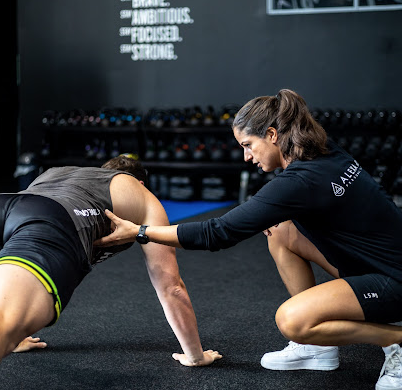
Our strength training in Burleigh Heads uses personalised coaching to help you choose suitable movements and progress them with a purpose.
Do you have to train to failure or use one exact rep range?
No. Your sets need to provide a meaningful challenge, but you do not have to take every set to the point where you cannot complete another repetition. For a beginner, learning consistent technique and recognising an appropriate effort level are useful priorities.
There is also no single repetition range that guarantees glute growth. The right combination of load, repetitions and sets depends on the exercise and the person. Avoid turning every movement into a test of how much discomfort you can tolerate.
The American College of Sports Medicine’s updated resistance-training guidance notes that reaching momentary muscle failure is not consistently necessary for the average healthy adult. A coach can help you work hard while keeping the session appropriate for your ability.
What role do food and recovery play?
Training gives the muscles a reason to adapt, while food and recovery support that process. Include protein-containing foods regularly and eat enough to support your activity. Examples include eggs, fish, dairy foods, tofu, legumes and meat, according to your preferences and dietary needs.
You do not need to assume that a supplement or aggressive bulk is essential. If you are trying to lose body fat while building muscle, the approach needs to account for both goals. Our guide to nutrition, weight loss and muscle gain for women explores how training and food choices fit together.
Recovery also means allowing challenging sessions to be followed by easier days and a consistent sleep routine. If fatigue is repeatedly affecting technique or performance, review the program before adding more exercises. Sharp or persistent pain needs assessment rather than an instruction to push through.
Why might your glutes not be growing?
Before replacing your entire routine, check these common programming issues:
- No clear progression: you have used the same resistance and repetitions for months without reviewing the challenge.
- Constant exercise changes: you swap routines so often that it is difficult to practise or track improvement.
- Too much work to recover from: fatigue repeatedly reduces the quality of your sessions.
- Inconsistent attendance: a demanding plan looks good on paper but rarely gets completed.
- Food intake that does not support the goal: nutrition and training are pulling in different directions.
- Unrealistic comparisons: another person’s photographs, genetics or training history are being used as your deadline.
Changes in strength and movement control may be easier to notice than changes in appearance. Track your own performance over time. If you choose to use progress photographs, keep the conditions consistent and avoid judging the program from daily changes.
Frequently asked questions
Are squats enough to grow my glutes?
Squats can contribute to glute growth, but they are not the only useful exercise. A program may also include hip thrusts, hinges or single-leg movements. Choose exercises you can perform comfortably and progress, rather than assuming one movement is essential for everyone.
Can I grow my glutes with two workouts a week?
Two appropriately structured sessions can provide a useful starting point, particularly for a beginner. Results depend on the exercises, training challenge, consistency, nutrition and recovery. The total work completed across the week matters as well as the number of sessions.
Do I need to feel a burn for the exercise to work?
A burning sensation is not a reliable measure of muscle growth. Focus on controlled technique, an appropriate challenge and progress across your training sessions. You do not need to chase discomfort or soreness to prove that you have trained effectively.
Can I build my glutes at home?
Yes, home training can be useful when exercises provide enough challenge and can be progressed. Bodyweight movements, bands or weights may be suitable depending on your starting point. As you become stronger, you may need more resistance or a different variation.
How long does it take to see glute growth?
Visible changes vary with your training history, genetics, program, nutrition and consistency. Think in terms of a sustained training process rather than a fixed deadline. Improving your technique and performance can show progress while appearance changes take longer to assess.
Should I train my glutes every day?
Daily hard glute sessions are unnecessary for most beginners and can make recovery harder. Plan challenging sessions alongside the rest of your training and adjust the workload to your response. Easier movement between sessions can still be part of an active routine.
Build a glute-training plan that suits you
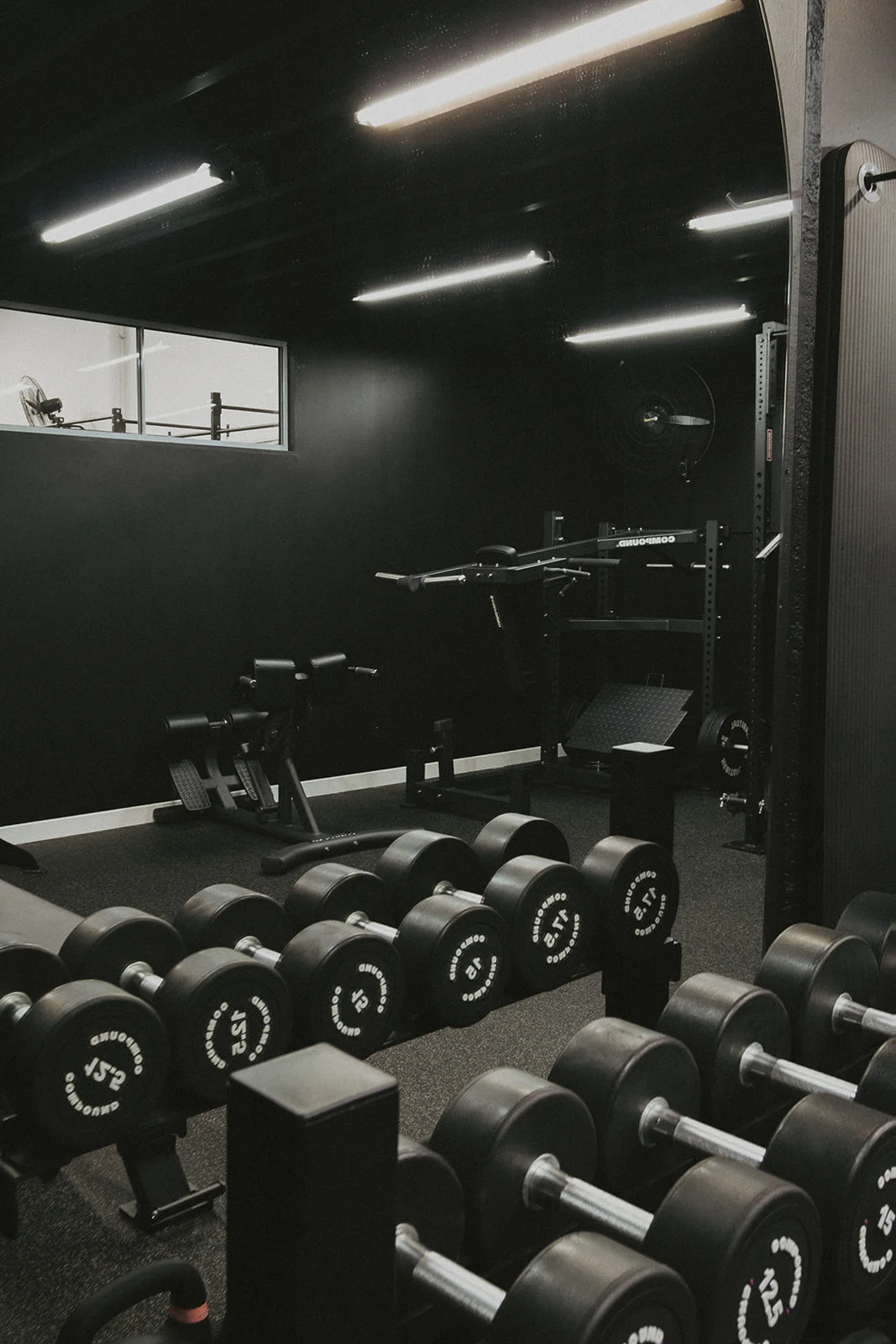
Good glute training has a clear purpose, suitable exercises and a way to measure improvement. If you want help choosing your starting point, our women’s personal training in Burleigh Heads provides individual coaching in a private studio.
For personal training enquiries, book a free discovery call with Resolve Performance. We can discuss your goals and how glute training can fit into a balanced strength program.